I’m a middle aged professional that recently rekindled the interest of looking and feeling fresh casually with the help of sports apparel and sneakers. So with nothing else to enjoy at the moment I dove right into the convoluted world of sneakerheads, hypebeasts, and guys like myself that simply appreciate looking good and feeling sharp. It is a culture that goes hand in hand with fashion, hip hop, sports, brands, music, and identity.
I grew up listening to hip hop and absorbing a lot of the culture around it, but my parents never spent frivolously on expensive sneakers for me even though they easily could have. They spent their money on things like good food, vacations, nice cars, experiences, and a beautiful home in a great neighborhood. Looking back, they probably made the smarter decision financially, but I also understand now why sneakers became so meaningful to so many people.
You notice sneakers when you are young.
You notice the confidence they seem to give people. You notice how certain pairs instantly stand out. Some shoes become attached to entire eras of sports, music, and culture. Others become symbols of exclusivity and taste.
As I got older and could finally buy whatever sneakers I wanted within reason, I realized the sneaker world is much deeper than just fashion. Sneakers exist in this unique space between collecting, investing, self expression, nostalgia, and culture. That is part of what makes them so addictive and honestly so interesting.
And the biggest force driving much of the sneaker market is hype.
Hype is attention. Hype is scarcity. Hype is relevance. Sometimes the difference between an ordinary sneaker and a highly valuable one comes down to timing, celebrity association, limited production, or social momentum.
We have already seen certain sneakers appreciate dramatically over time. Original Air Jordan releases, Nike SB Dunks, Yeezys during their peak years, and collaborations involving Travis Scott or Off White became legitimate collectible assets. Some pairs that retailed below $200 eventually climbed into the thousands because demand exploded while supply remained limited.
What fascinates me is how closely sneaker culture resembles investing psychology.
The people who often profit the most are usually the ones that understand timing rather than simply chasing hype emotionally. Many sneakers reach their highest values when demand, scarcity, and cultural attention all collide at once. In some situations that may actually be the best time to unload a pair if your goal is profit.
A lot of collectors make the mistake of assuming every hyped sneaker will continue appreciating forever. That is not how markets work. Trends cool off. Brands flood the market with similar releases. Consumer attention shifts. The shoes everyone is fighting over today can become much less desirable a few years later.
At the same time, there are absolutely sneakers that rewarded long term holders tremendously.
Some original Nike SB Dunks that sat untouched in skate shops years ago became worth several thousand dollars later because so few people preserved them in good condition. Early Jordan colorways tied to important moments in basketball history became cultural artifacts. Certain rare collaborations became far more valuable because they represented a specific moment in fashion and music that can never really be recreated again.
That is where understanding culture becomes just as important as understanding the sneaker itself.
Not every sneaker deserves to be held forever and not every sneaker should be flipped immediately either.
I think smart sneaker collecting comes down to understanding a few things:
- Is the sneaker culturally significant?
- Was production truly limited?
- Does the design actually stand out long term?
- Is the demand organic or artificially inflated?
- Would people still want this shoe years from now even without social media hype?
Sometimes the smartest move is taking profits when the market becomes irrational. Other times the smartest move is holding onto pairs connected to genuine cultural history and scarcity.
The key is intentionality.
That is where sneaker collecting becomes much more interesting than people from the outside realize. It is not just about shoes. It is about understanding people, trends, identity, branding, exclusivity, and emotional attachment. Sneaker culture moves almost like its own miniature stock market driven by psychology and attention.
Of course there are downsides if someone loses control of it.
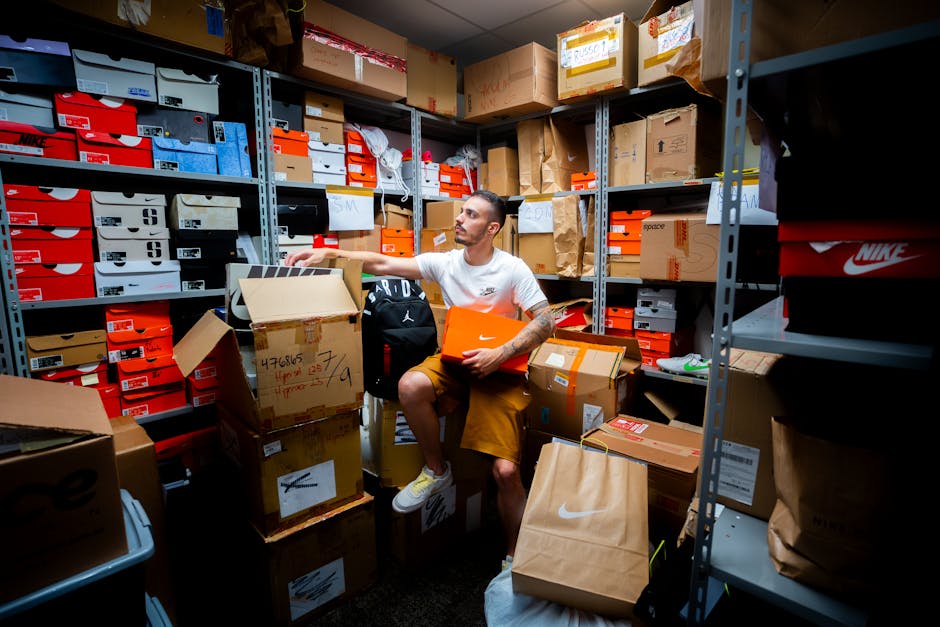
Storage becomes an issue. Money gets tied up. Some people buy sneakers they do not even personally like simply because they are afraid of missing out. Entire rooms become stacked with boxes that rarely get worn. At a certain point collecting anything without intention can become clutter instead of enjoyment.
But when approached correctly, sneaker collecting can actually be one of the more enjoyable forms of collecting because it combines fashion, culture, social connection, and potential appreciation all at once.
Unlike many collectibles, sneakers are interactive. You can wear them, style them, photograph them, display them, and connect memories to them. A great pair of sneakers is not just something you stare at on a shelf. It becomes part of experiences, conversations, travel, nights out, events, and stages of life.
And honestly, some sneakers simply make you feel good when you put them on. There is value in that too.
I think the healthiest approach is collecting with awareness instead of blindly consuming. Buy pairs you genuinely appreciate. Understand the market if you plan to profit. Recognize when hype may be peaking. Understand that some sneakers are temporary trends while others become part of cultural history.
Most importantly, enjoy the process.
Because sometimes the best value is not just the resale price years later. Sometimes it is the memories attached to the pair while you owned them.