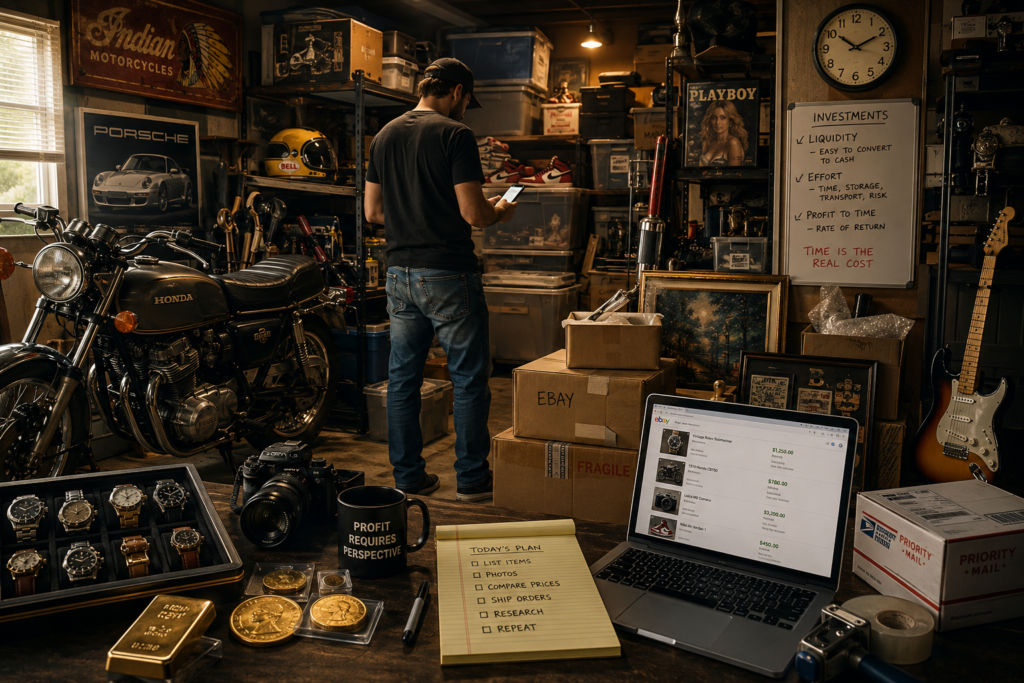
Everything you spend money on with the intention of making a profit is an investment. Most investors want the same thing: the highest possible return in the shortest amount of time, while still being able to convert that investment back into cash when needed. Yet when it comes to physical items, many people stop thinking like investors.
When people buy stocks, real estate, or businesses, they usually analyze risk, liquidity, timing, and potential return. But when it comes to collectibles, luxury goods, tools, memorabilia, cars, motorcycles, or everyday items they hope will appreciate, those same thought processes often disappear. Emotion replaces logic. Convenience replaces strategy.
A lot of people underestimate what it actually costs to hold onto physical items. Storage space has value. Moving things takes time and energy. Items can become damaged, outdated, or stolen. Markets shift. Trends fade. What once seemed rare or desirable can suddenly become difficult to sell.
During my years working as a liquidator, I saw this constantly. I also saw the opposite. I bought items that resold for several times what I paid almost immediately. The difference was rarely luck alone. The best opportunities usually involved understanding demand, timing, effort, and realistic resale expectations.
One of the biggest mistakes people make is only focusing on the possible profit without considering the effort required to achieve it. How much time did it take to find the item? How long did you wait in line for it? How difficult is it to store, photograph, transport, ship, or explain to buyers? If you are operating alone, these things matter even more.
Sometimes a large, bulky item may technically offer a decent profit margin, but it drains so much time and energy that the return is not worth it. Meanwhile, smaller high demand items can move quickly with far less effort and stress. A profitable investment is not always the one with the biggest markup. Sometimes it is the one that creates the smoothest path back to cash.
There is also another reality many people avoid thinking about. Something can have value without having buyers. Owning an item that is “worth money” means very little if you cannot realistically sell it. This is where idealism often collides with reality. Markets are constantly changing. Items that once sold easily can become stagnant. Demand can disappear faster than people expect.
If your goal is to eventually turn your investments back into usable money during your lifetime, three factors matter constantly:
Liquidity: How easily can the item be converted back into cash?
Effort: How much work, stress, and energy are required to profit from it?
Time: How long will it realistically take to achieve the return you want?
These factors are deeply connected. The longer something sits unsold, the more it quietly costs you. Not just financially, but mentally and physically as well.
Physical investments offer something unique because they are tangible. You can hold them, display them, admire them, and sometimes enjoy them while they appreciate. A gold bar, a vintage watch, a classic motorcycle, or a rare collectible all provide a different experience than numbers sitting in a brokerage account. That tangible connection is part of what attracts people to physical assets in the first place.
But liquidity varies dramatically between different types of physical investments. Precious metals are generally easier to convert back into cash because there is a broad established market. Collectibles, art, and niche enthusiast items can sometimes produce far larger returns, but they often depend on finding the right buyer at the right time. The value may exist on paper long before cash ever reaches your hands.
Time management also becomes critical when dealing with physical items. Markets move quickly. Consumer tastes change. Competition increases. Opportunities appear and disappear faster than many realize. Poor timing can turn a great purchase into a frustrating burden.
I learned this firsthand through rushed decisions and emotional purchases that later became difficult to justify. On the selling side, timing matters just as much. Responding quickly to buyers, pricing according to current demand, and managing listings efficiently can dramatically affect profitability. Sometimes the difference between making money and losing momentum comes down to responsiveness and consistency.
When time is managed properly, the entire experience becomes more profitable and far less stressful.
Of course, not everything we own is meant to be sold. Some things are tied to identity, passion, family, and memory. Collecting is very different from simply buying for profit. Sentimental items provide a different kind of value entirely.
But even then, I believe the things we care about most should not simply sit hidden away in storage. The greatest value often comes from being able to enjoy them, display them, and share them with the people we love. A meaningful collection should add to your life while you own it, not just someday when it is sold.
There are many layers to collecting, ownership, and value that go far beyond money alone. I’ll continue exploring these ideas in future articles because the relationship between people and the things they own is far more important than most realize.