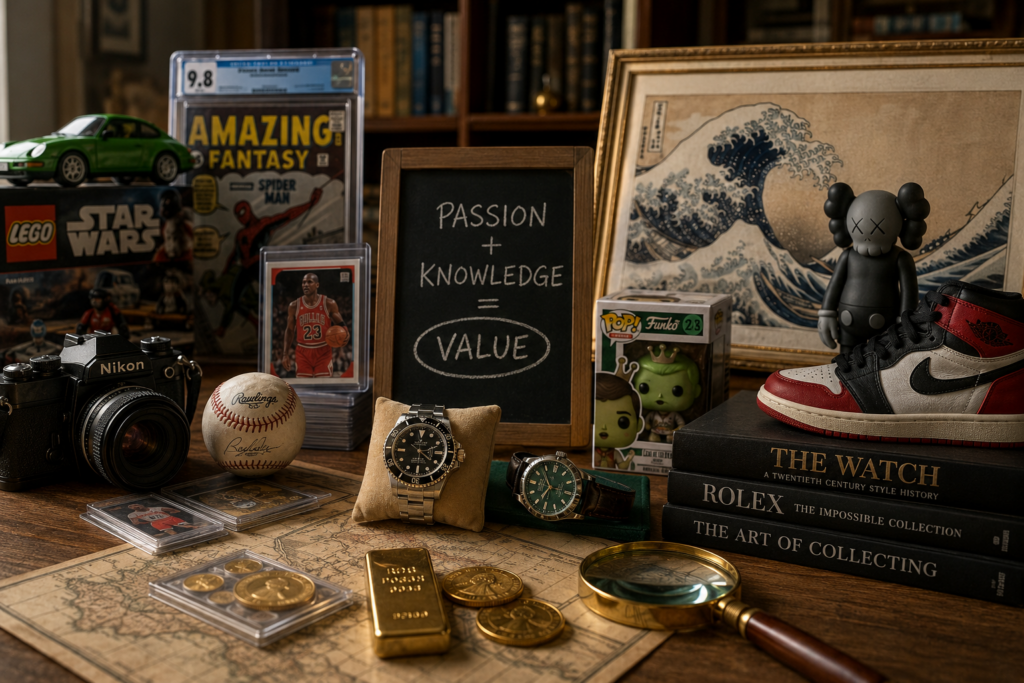
Why Hobbies, Brands, and Collectibles Are Becoming Real Investments
Most people still think investing means stocks, real estate, maybe a business if they’re a little more aggressive. But there’s a whole category that’s been quietly building serious money. Things people actually care about.
Hobbies. Brands. Collectibles.
This isn’t just about owning cool stuff. It’s about understanding value in places most people overlook.
And if you know what you’re doing, that gap is where money gets made.
When a Hobby Stops Being a Hobby
A lot of the strongest alternative investments don’t start as investments at all. They start as interest. Curiosity. Obsession.
That’s the advantage.
When you’re deep in something, you see patterns early. You know what matters before the market decides it matters.
Take sports cards. For years, it was just nostalgia. Then suddenly, the right cards weren’t just collectibles. They were assets. A 1952 Mickey Mantle card selling for over $12 million didn’t happen overnight. The people who made real money weren’t the ones chasing headlines. They were the ones who already understood rarity, condition, and timing before the hype.
Same thing with wine. To someone on the outside, it’s just a bottle. To someone who knows what they’re looking at, it’s supply, age curve, region, and demand all wrapped into one. That’s why a single bottle can sell for hundreds of thousands.
This is the pattern. When you understand something deeply, you’re not guessing. You’re positioning.
Brands That Carry Value Beyond the Product
Some brands don’t just sell things. They build identity. Status. History.
That’s where the value comes from.
A Rolex isn’t just a watch. It’s a signal. And because that signal holds across generations, certain models don’t just retain value. They climb.
The same logic applies in places people underestimate. LEGO sets are a perfect example. Most people don’t take it seriously. But limited runs, discontinued sets, and nostalgia create real demand. A set that sold for a few hundred dollars can quietly turn into a few thousand if you knew which one to hold onto.
This is where people get it wrong. They either dismiss it completely or jump in blindly.
The real move is understanding why something holds value, not just that it does.
Collectibles as a Different Kind of Asset
Traditional investments are tied to systems. Markets, interest rates, economic cycles.
Collectibles operate differently.
Their value is driven by scarcity, culture, and demand within a specific group of people who actually care.
That’s why a comic book can sell for millions. Or a car can hit tens of millions. It’s not because of what it costs to make. It’s because of what it represents.
A vintage comic isn’t paper. It’s the first appearance of something that shaped culture.
A classic car isn’t transportation. It’s history, design, and rarity in one form.
That separation from traditional markets is what makes this category powerful. It doesn’t always move with everything else.
But that doesn’t mean it’s safe.
Where This Goes Wrong for Most People
This is where people lose money.
They treat it like a shortcut instead of a discipline.
They buy what they like instead of what holds value.
They follow hype instead of understanding timing.
They ignore condition, storage, authenticity. All the details that actually determine price.
And the biggest mistake. They assume everything appreciates.
It doesn’t.
Most collectibles don’t go up. Some sit. Some drop. Some become impossible to sell because the market moved on.
You also have issues most people don’t think about.
Liquidity
You can’t just click a button and sell. Finding the right buyer takes time.
Storage and maintenance
Wine can go bad. Cars need upkeep. Paper deteriorates. Condition isn’t optional. It’s everything.
Authenticity
One mistake here wipes out your investment completely.
Market shifts
What’s hot today can be irrelevant tomorrow.
This isn’t passive investing. It’s active, whether you admit it or not.
What Actually Makes This Work
If you strip it down, the people who win in this space do a few things consistently.
They stay in categories they understand
They focus on rarity and demand, not just price
They pay attention to condition and preservation
They buy before attention, not after
They think long term, not quick flip
And most importantly, they don’t confuse enjoyment with justification.
Just because you like something doesn’t mean it’s a good buy.
Why This Still Matters
Even with the risks, this space is growing for a reason.
People are starting to realize that value isn’t limited to traditional assets. It shows up anywhere scarcity, demand, and meaning intersect.
That opens up opportunities most people never see.
You can build a collection that pays you.
You can turn knowledge into an edge.
You can own things that actually add something to your life while still holding financial upside.
But only if you approach it correctly.
The Real Takeaway
This isn’t about replacing traditional investing. It’s about expanding how you think about value.
Everything you own is either taking from you or giving to you.
Hobbies, brands, and collectibles can go either way.
Handled right, they become assets.
Handled wrong, they become expensive distractions.
The difference isn’t the item.
It’s how you own it.