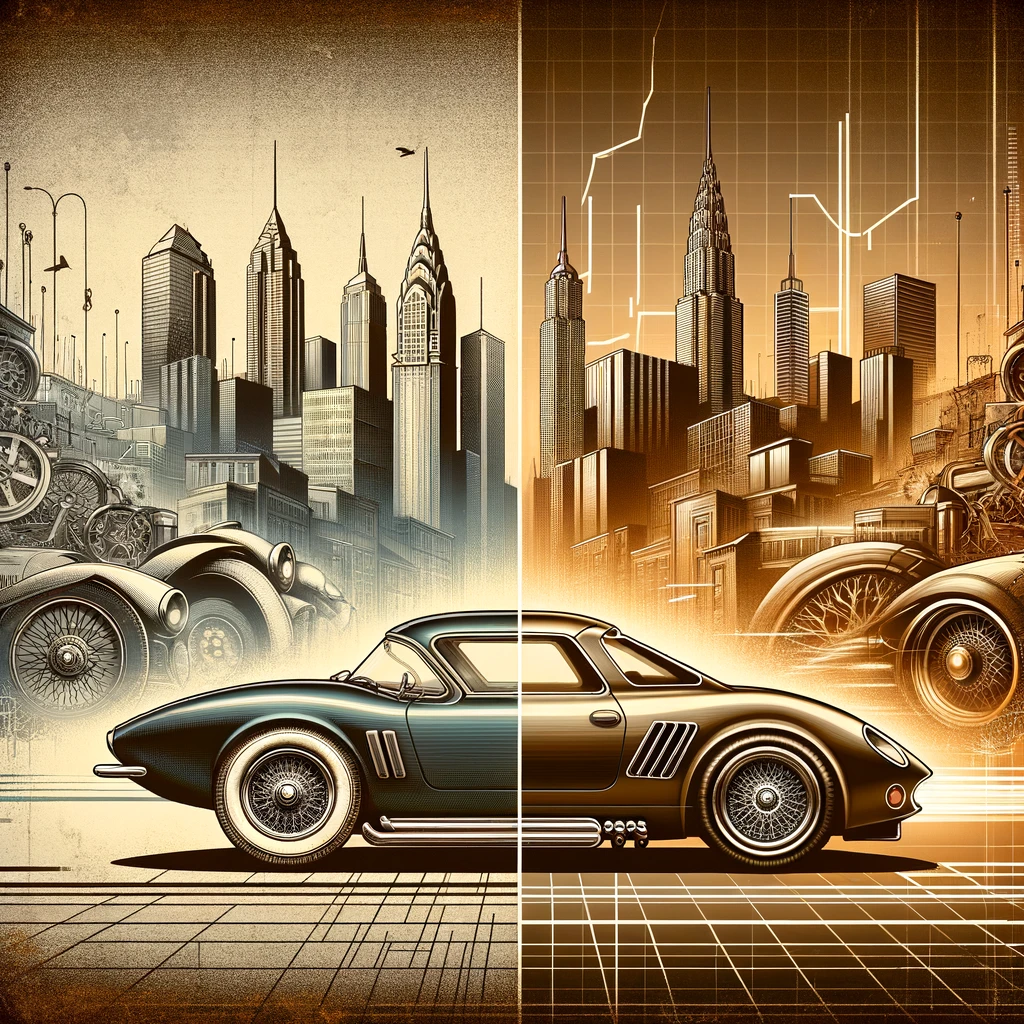
For a lot of people, sports cars are far more than transportation.
They represent freedom, identity, engineering, status, nostalgia, competition, beauty, and sometimes even a certain period of life we wish we could hold onto a little longer.
You don’t forget certain cars.
You remember where you first saw them. The sound they made. The poster on your wall. The movie scene. The first time one drove past you and completely changed your idea of what a car could be.
That emotional connection is a huge reason people become collectors in the first place.
But once you move past admiration and actually start buying, the question becomes more complicated.
Do you go vintage or modern?
I’ve spent time around both worlds, and they attract very different types of owners, experiences, and financial realities. Neither is automatically better. They simply offer different forms of value.
Vintage Cars Feel Alive in a Different Way
There’s something raw about older sports cars that modern vehicles struggle to replicate.
The steering feels mechanical. The smells are different. The visibility is different. The sounds are less filtered. You feel more connected to the machine because the machine asks more from you.
Older cars demand involvement.
A vintage Porsche, classic Camaro, older Ferrari, or Jaguar E Type has imperfections by modern standards, but sometimes those imperfections are exactly what create the experience people fall in love with.
Modern cars are often objectively better in performance, but vintage cars can feel more memorable.
That matters more than people think. How many enthusiasts are actually trying to beat previous track times!
Some older cars almost feel like rolling time machines. Driving them pulls you into another era. The dashboard layout, the analog gauges, the engine vibration, even the way the doors shut creates an experience modern cars often smooth out in the pursuit of refinement.
That emotional experience is a huge reason vintage cars continue appreciating.
People are not just buying transportation. They’re buying feeling.
Modern Sports Cars Are Insanely Capable
At the same time, modern sports cars are incredible.
The performance level today is honestly absurd.
Cars that would have embarrassed supercars twenty years ago are now sitting in ordinary dealerships with warranties, heated seats, backup cameras, Bluetooth, launch control, adaptive suspension, and reliability that older collectors could only dream about.
A modern Corvette C8, Porsche GT3, Nissan GTR, or McLaren can perform at levels that used to belong only to race cars.
And unlike many classics, you can usually jump in and drive them across the country without wondering if something important is about to leak, overheat, crack, or fall apart.
That usability matters to people that value the experience in them than looking at them.
A lot of people romanticize vintage ownership until they actually experience old car problems. Parts delays. Carburetor issues. Electrical gremlins. Constant smells. Heat. Noise. Vibration. Lack of air conditioning. Rust concerns.
Some people love that experience.
Others realize they only loved the idea of it.
Vintage Cars Can Become Financial Monsters
One thing newer collectors underestimate is how expensive vintage ownership can become.
Not just purchase price. Everything.
Storage. Maintenance. Restoration. Paint correction. Hard to find parts. Specialized labor. Transportation. Insurance.
A cheap vintage sports car can quickly become an expensive project.
I’ve seen people buy older cars thinking they found a bargain, only to spend years and massive amounts of money trying to chase perfection afterward.
And perfection is dangerous in the vintage world because it never really ends.
There’s always another detail to correct. Another rare part to source. Another issue hidden underneath something else.
Sometimes the restoration costs exceed the car’s value entirely.
That doesn’t mean vintage collecting is bad. It just means people need to enter it honestly with the right perspective and knowledge.
The people who usually enjoy vintage ownership most are the ones who genuinely love the cars themselves, not the people expecting easy profits.
Modern Cars Have Their Own Risks Too
A lot of people assume modern sports cars are safer financially because they’re newer.
Not necessarily.
Most modern performance cars depreciate hard.
Manufacturers produce more of them. Technology changes quickly. Facelifts happen constantly. Newer models often outperform older ones almost immediately.
Someone can spend six figures on a modern car and lose massive amounts of value within a few years.
That said, some modern cars absolutely become collectibles but it’s rare.
Limited production cars, manual transmission cars, final generation combustion models, homologation specials, and emotionally significant cars often hold value far better than people expect.
Especially now.
The automotive world is changing quickly with electrification, regulations, automation, and shrinking enthusiast options. That shift alone may make certain modern gas powered sports cars far more special in the future.
People underestimate how much rarity can be created simply by the end of an era.
The Best Cars Usually Create Emotion
This is true for both vintage and modern cars.
The cars that become iconic are usually the ones that make people feel something.
Not necessarily the fastest. Not necessarily the most expensive.
Some cars become legendary because of design. Others because of racing history. Others because they represented an era perfectly.
The original Acura NSX became special because it changed expectations. The Dodge Viper became special because it felt insane and unapologetic. The air cooled pre 1998 Porsche 911 became special because of the purity of the driving experience.
Emotion drives collectibility far more than statistics.
That’s why some technically inferior cars continue exploding in value while objectively faster vehicles get forgotten.
Car Collecting Can Quietly Become Addiction
This side almost nobody talks about.
The thrill of chasing the next car can become addictive.
The hunt. The purchase. The excitement. The attention. The fantasy of finally owning “the one.”
Then after a few months, the excitement fades and the search starts again.
I’ve watched people constantly rotate through cars chasing a feeling they can never permanently hold onto. Sometimes they’re not actually collecting cars anymore. They’re collecting temporary emotional highs.
That gets expensive fast.
Storage fills up. Projects pile up. Maintenance gets ignored. Relationships get strained. Financial priorities get distorted.
A car collection should add value to your life, not consume it, not effect everything else important to you. This of course goes with any hobby or collection. Balance is key to the longevity of joy.
That distinction matters more than most enthusiasts want to admit.
Vintage vs. Modern Really Comes Down to Personality
Some people want purity, nostalgia, history, and mechanical simplicity.
Others want performance, comfort, reliability, and cutting edge engineering.
Some want both.
Honestly, the best collections often blend eras well. Older cars bring character. Modern cars bring usability and performance. Together they create contrast and appreciation for both.
The key is intentionality.
Buying cars simply because they’re hyped usually ends badly. Buying because you genuinely understand and appreciate what makes a car special tends to create far better long term ownership experiences.
Final Thoughts
Sports car collecting is rarely rational.
That’s part of what makes it beautiful.
Cars can represent achievement, freedom, identity, engineering, youth, memory, and emotion all at once. Very few objects create that kind of connection.
But passion can also cloud judgment.
Some cars become incredible investments. Others become expensive distractions disguised as investments.
That’s why understanding yourself matters just as much as understanding the car.
Because in the end, the experience of ownership is part of the value as well.